
From medieval monastic masonry to modern architectural projects, Witton Fell sandstone has long belonged to the landscape it comes from
For anyone specifying natural stone, provenance matters. Witton Fell sandstone is more than a beautiful building stone: it is a locally quarried Yorkshire sandstone with a clear origin, a distinctive character and a direct connection to one of Wensleydale’s most atmospheric historic sites, Jervaulx Abbey.
Quarried exclusively by us here in the heart of Wensleydale, Witton Fell sandstone is deeply rooted in North Yorkshire. For AD Calvert Stone, it is not simply a product. It is our own distinctive Yorkshire stone, responsibly sourced from our quarry and worked by specialist teams who understand its character from block to finished detail.
Its provenance is part of what makes it so special. This is stone with a clear origin, a strong local identity and a history that reaches back far beyond today’s construction projects.
A stone shaped by Wensleydale
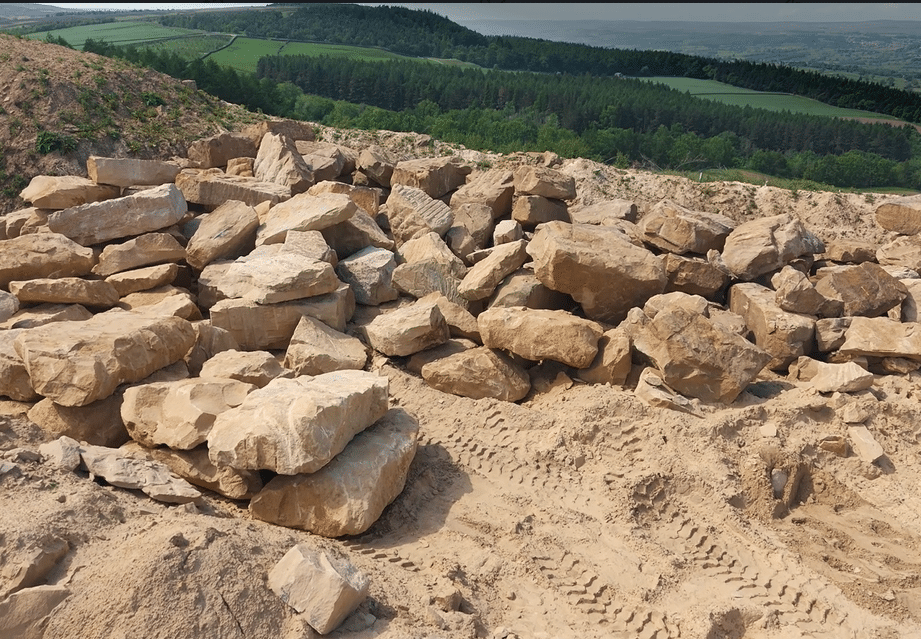
Witton Fell sandstone is quarried near East Witton, close to Jervaulx Abbey, in one of the most beautiful parts of the Yorkshire Dales. The stone is known for its fine to medium grain, warm buff tones and natural variation, with occasional brown flecks and veins that give each piece its own quiet individuality.
When dry, it can appear light and softly golden. When wet, it deepens in tone, taking on a richer, earthier colour that sits naturally within the Dales landscape. This ability to change with the weather is one of the reasons natural stone has such enduring appeal.
For architects, builders and private clients, that sense of belonging matters. Provenance is not just about where a material is from. It is about confidence, traceability and choosing a material that is appropriate to its setting.

Built into the history of Jervaulx Abbey
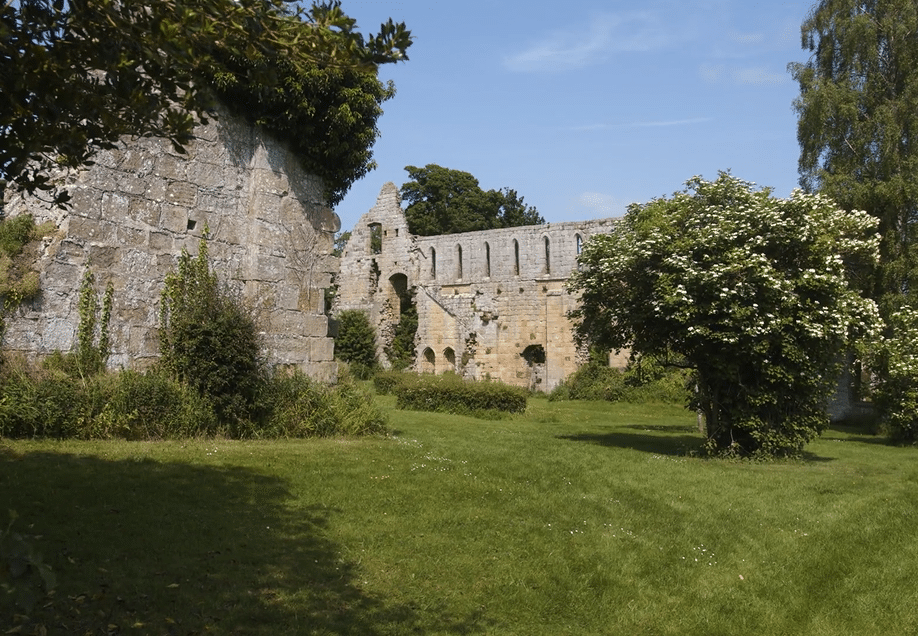
Just a short distance from Witton Fell stands Jervaulx Abbey, one of the great Cistercian abbeys of Yorkshire. Founded in the 12th century and moved to its East Witton site in 1156, the abbey became an important religious and agricultural community in the valley.
The monks who built Jervaulx understood the value of local materials. They used the stone available around them to create a place of worship, work and community – masonry that still speaks today through the atmospheric ruins visitors see in the landscape.
Witton Fell sandstone has long been associated with the construction of Jervaulx Abbey and nearby East Witton Church. That connection gives the stone a rare depth of provenance: it is not only quarried close to these historic buildings, but forms part of the architectural story of the area.
To specify Witton Fell sandstone today is to choose a material that has already proved itself across centuries. It has weathered North Yorkshire winters, carried the marks of hand and tool, and remained part of a setting where stone is part of the landscape.
Why provenance still matters
In modern construction, provenance is increasingly important. Clients want to know where materials come from, how they are sourced and whether they are suitable for the long term. Natural stone has a strong story to tell here, especially when it is locally quarried, carefully processed and supplied with knowledge of its performance and finish.
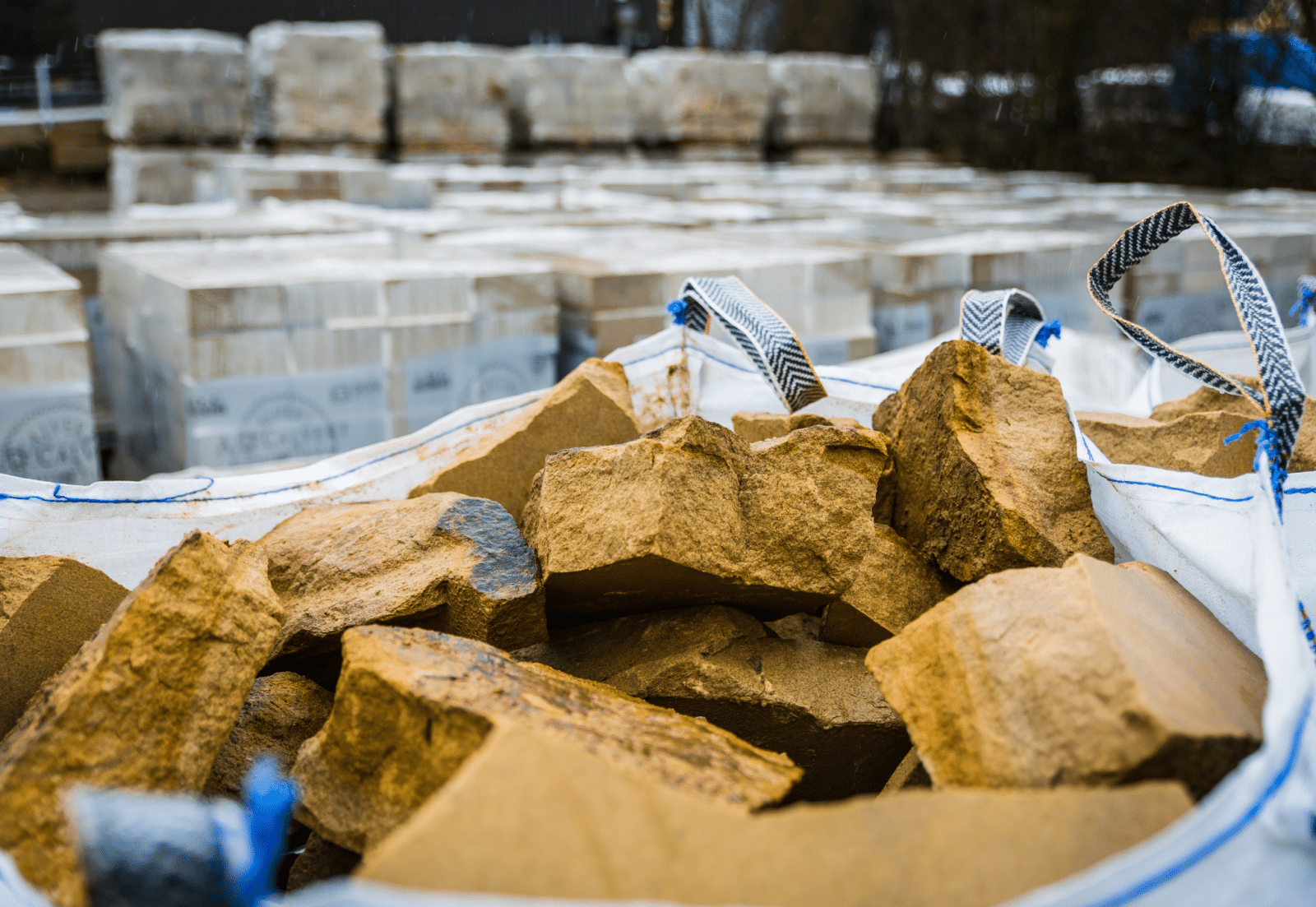
At AD Calvert Stone, every block of Witton Fell sandstone comes directly from our own quarry. That gives our customers a clear line of sight from source to finished product. It also means our quarry, workshop and technical teams work closely together, helping to ensure consistency, quality and the right specification for each project.
Whether used for walling, ashlar, architectural masonry, copings, cills, steps, bespoke details or conservation-led work, Witton Fell sandstone offers strength, durability and a naturally refined appearance.
A material for traditional and contemporary design
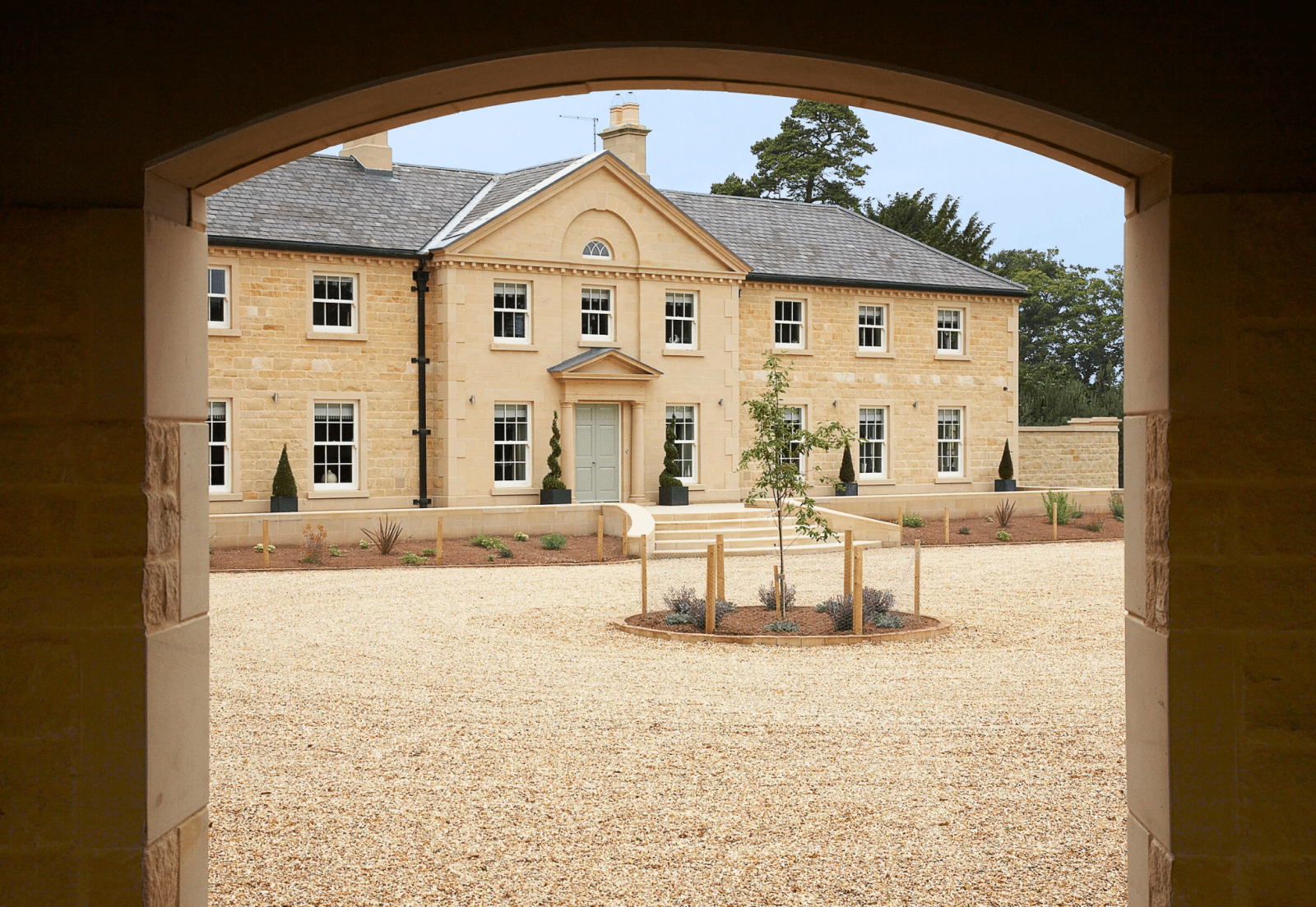
The heritage of Witton Fell sandstone does not limit it to traditional buildings. Its natural warmth and understated texture make it equally suited to contemporary design, where authentic materials can bring depth, permanence and a sense of place.
Available in a range of finishes – from sawn and honed to sandblasted, split, tumbled or pitched faced – it can be tailored to suit different architectural styles and levels of detail. The same stone that once helped shape monastic buildings can now be specified for modern homes, commercial developments, public realm schemes and restoration projects.
That continuity is powerful. It shows that good materials do not belong to one period of architecture. They endure because they continue to perform, adapt and age beautifully.
Natural Stone. Done Properly.
For us, Witton Fell sandstone represents everything we believe natural stone should be: locally sourced, responsibly quarried, carefully worked and supplied with expertise. Its link to Jervaulx Abbey reminds us that the best buildings are not just made from materials, but from materials with meaning.
From the monks who built in the valley nearly nine centuries ago to the architects and builders shaping places today, Witton Fell sandstone continues to connect craftsmanship, landscape and legacy.
Planning a project with Yorkshire sandstone? Contact AD Calvert Stone to discuss specifying Witton Fell sandstone direct from the source.